
Keynote SPEAKERS

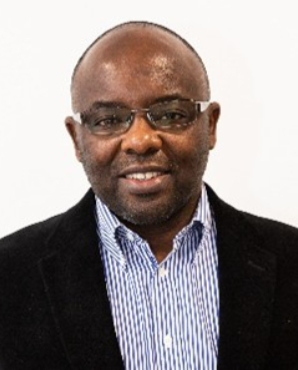
Professor James Njuguna

Professor James Njuguna

Robert Gordon University, United Kingdon
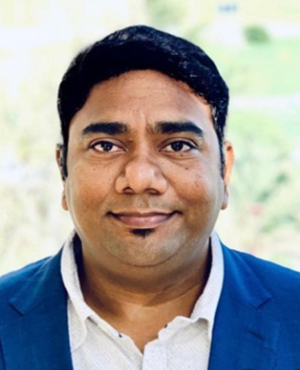
Professor Njuguna is the Director of Research and Innovation at the National Subsea Centre (NSC) at Robert Gordon University (RGU). Professor Njuguna is an internationally recognized expert in composite materials, with a particular focus on their application in high-performance and extreme environments, including the oil and gas, aerospace, automotive, renewable energy, and construction sectors.  His research addresses the durability and safety of advanced materials and structures under operational conditions, with significant contributions to understanding failure mechanisms in polymer fibre-reinforced nanocomposites, especially the emission and diffusion behaviours of nanofillers. He is a Fellow of both the Royal Society of Edinburgh (FRSE) and the Institute of Materials, Minerals and Mining (FIMMM), and currently serves as Vice-President (International) of the Royal Society of Edinburgh.
Professor Sudesh Sivarasu

Professor Sudesh Sivarasu

University of Cape Town, South Africa
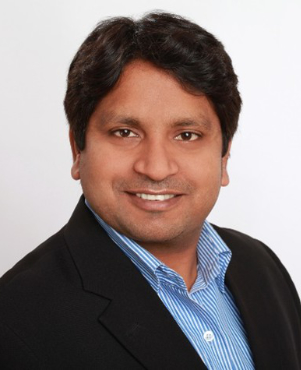
Prof. Sudesh Sivarasu holds the DSTI/NRF SARChI South African Research Chair in Biomedical Engineering Innovation and serves as Director of UCT’s Biomedical Engineering Research Centre and Head of Biomedical Engineering. As UCT’s most prolific inventor, he has 67 patent applications (27 granted) across multiple countries and has created FrugalBiodesign™, a methodology for developing medical devices for resource-constrained environments.  His innovations have led to five UCT spin-off companies and numerous award-winning health technologies including reScribe, Laxmeter, and ZiBiPen. Prof. Sivarasu maintains international connections as adjunct professor at Northwestern University USA,  MAHE- India and Università Campus Bio-Medico di Roma – Italy. His research on appropriate health technologies for low-resource settings has produced 1 text book, over 100 peer-reviewed journal & Conference articles , a book on medical device innovation and earned prestigious accolades including the UCT Deputy Vice-Chancellor’s Award for Innovation. Prof. Sivarasu has successfully supervised 62 students to completion and currently guides 18 more, while his work has garnered 16 MedTech awards across four continents.
Professor Yogendra Kumar Mishra

Professor Yogendra Kumar Mishra

University of Southern Denmark

Yogendra Kumar Mishra, Fellow of Royal Society of Chemistry (FRSC), UK, is currently working as professor and the Leader of the Smart Materials group at Mads Clausen Institute, University of Southern Denmark (SDU), Sønderborg, Denmark. Before SDU, he was leading an independent research group on 3D Nanomaterials at Functional Nanomaterials Chair, Kiel University. At SDU, NanoSYD, the Smart Materials group’s main focus is to develop a new class of ‘Functional Materials for Advanced and Sustainable Technologies’.  He is an Editorial Board Member/Associate Editor for many prestigious magazines (Advanced Functional Materials, Materials Today Family, Nano Energy, etc.). He has received many notable awards, like Alexander von Humboldt Fellowship (2008 ) and the Young Investigator Award (under 40 ) from BHJ Fonden-Denmark and has won several successful grants.
Professor Hulda Shaidi Swai

Professor Hulda Shaidi Swai

Nelson Mandela African Institution of Science and Technology (NM-AIST), Tanzania

Professor Hulda Shaidi Swai is a Nanoscientist and a Senior Professor in the School of Life Sciences and Bioengineering at the renowned Nelson Mandela African Institution of Science and Technology (NM-AIST) in Arusha, Tanzania.
Prof. Swai holds a PhD in Biomedical Materials Science in Biomaterials in Dentistry from the University of London, Queen Mary & Westfield College. Prof. Swai holds a Master of Science (MSc) degree in Technology and Development in Chemical Engineering from University of London, Imperial College of Science and Technology and a Bachelor of Science (BSc) degree in Statistics & Chemistry from the University of the Dar Es Salaam, Tanzania.
 Prof. Swai is Research Chair under the Oliver Tambo (OR Tambo) African Research Chairship Initiative which was highly competitive and only 10 Professors were awarded in Africa in 2020. In this she is researching the use of Nanoscience in the development of novel antimalaria drugs as well as developing human critical mass in Nanoscience not only in Tanzania but the rest of Africa. So far she has made very good strides with very interesting Research results. In this project, she has recruited 3 post docs, and 1 assistant lecturer, 4 PhDs and 3 MSC students. These Research Scholars are working different Projects geared towards the fight against malaria using Nanomedicine.
Prof. Swai is also a Centre Director of a World Bank Funded Centre of Excellence, CREATES (African Centre for Research, agricultural Advancement, Teaching Excellence and Sustainability in Food and Nutritional Security in Africa). She was awarded this Center after a very stiff competition in Africa where only 24 professors were awarded. The Centers were formed through the World Bank’s African Centers of Excellence (ACE II) initiative. This Centre of Excellence was formed through a 6 million USD grand from World Bank and it has been a performance-based project. Prof. Swai and her team managed to trigger all Disbursement linked indicators in due time and on a very exciting note, CREATES was one of the most successful ACE II.
Prof. Swai, who is a celebrated Nanotechnolology Scientist in Africa, is a Biomedical Researcher with 27 years of experience in Drug development and Drug delivery systems and over the years has focused on Poverty Related Diseases (PRDs) like HIV, Tuberculosis and Malaria.
Prof. Hulda has held other prestigious positions with high level of responsibilities. In 2013, she got a lifetime appointed as an Extraordinary Professor at the University of Pretoria, South Africa. In this role she is involved in developing and executing joint research projects, jointly supervising research for PhD and MSc. students and fund raising through joint proposal writing.
Prof. Hulda is the immediate former President of the African Materials Research Society (AMRS) following her appointment in May, 2018 and she is currently serving in the AMRS advisory Board and championing Nanoscience for Africa. In honor of her Presidency of this Transformational Society of Researchers, NM-AIST hosted the 10th AMRS International Conference in Arusha from 10th -13th December, 2019. https://www.africanmrs.net/ This was one of the most successful conference attracting up to 400 leading scientist from all over the world
Prof. Hulda has published immensely in high impact factor peer-reviewed journals with a h-index of 25 and has several book chapters. She has also obtained a number of international patents. Swai has won 16 other prestigious awards including the Tanzanian National Health Innovation Award. She was awarded by now President of Tanzania her Majesty Samia Suluhu and the Laureate of African Union Kwame Nkrumah Award in Scientific Excellence which she was awarded to her in the year 2020 by H.E. Sarah Anyang Agbor then Commissioner for Education, Science, Technology and Innovation (ESTI). Prof. Hulda has participated in very prestigious conferences as Keynote Speaker, scientific researches and outreach activities and these have further solidified her reputation as a leading authority in her Scientific niche. https://orcid.org/0000-0003-2180-8300 , Scopus Author ID: 6507987924
Prior to joining NM-AIST, Prof. Swai worked as a Senior Principal Researcher at the Council for Scientific and Industrial Research (CSIR), in South Africa, where she led the Encapsulation and Drug Delivery Research Group for 11 years. In this capacity, she proved her ability to independently formulate and execute research projects and implement scientific research programmes, both in public and private sectors. Prof. Hulda also instituted and headed the Department of Science and Technology (DST)/CSIR Pan-African Centre of Excellence in Applied Nanomedicine Research and Training. In this capacity, she won a grant in Research and Training on infectious diseases of poverty worth R 60 million (about US $ 7 million).

Dr Ioanna Giouroudi

Dr Ioanna Giouroudi

TU Wien

Professor Dr. Ioanna Giouroudi is Head of the Doctoral Center and Senior Scientist at TU Wien, where she leads the implementation and advancement of structured doctoral education across the university.
She has extensive experience in research training, PhD supervision, and academic program development, and is dedicated to empowering early-stage researchers to achieve excellence and drive innovation.
With more than 20 years of expertise in biomedical engineering and nanotechnology, her research spans the development of biomaterials for implants, portable diagnostic systems, smart materials for energy applications, and targeted drug delivery systems using magnetic methods.

Professor Jin-Woo Kim

Professor Jin-Woo Kim

University of Arkansas, USA
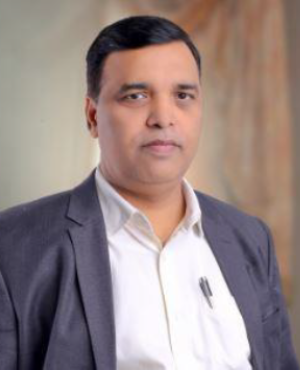
Jin-Woo Kim is Director of the Bio/Nano Technology Group and a Distinguished Professor of Biological Engineering and Materials Science & Engineering at the University of Arkansas, as well as an Adjunct Professor of Electrical Engineering at Pohang University of Science & Technology (POSTECH). He earned dual B.S. degrees in Chemical Technology (now Chemical & Biological Engineering) from Seoul National University and in Microbiology from the University of Iowa, followed by an M.S. in Biology from the University of Wisconsin and a Ph.D. in Biological Engineering from Texas A&M University.  He has held visiting appointments at Harvard University’s School of Engineering and Applied Sciences and at Brookhaven National Laboratory’s Center for Functional Nanomaterials. Dr. Kim’s research centers on biologically inspired nanotechnology, bridging biological/biomedical engineering, biology, chemistry, and nanotechnology. By learning from natural systems, his group develops innovative approaches for “panoscale” system integration – constructing multifunctional, hierarchical structures for advanced biomimetic materials and devices. He has published over 150 peer-reviewed papers, delivered more than 280 presentations (including over 100 invited talks), and holds six patents (granted or pending). He has received multiple awards for teaching and research, serves as Editor-in-Chief of the IEEE Open Journal of Nanotechnology, and is on the editorial boards of several leading journals. He has also reviewed for Science, PNAS, Nature Nanotechnology, and other top-tier publications. In professional leadership, Dr. Kim is President of the IEEE Nanotechnology Council (2024–2025) after serving as President-Elect (2023), Vice President for Conferences (2021–2022), and Vice President for Publications (2017–2019). He chairs the steering committees of IEEE-NANOMED and IEEE-LANANO and has organized numerous international conferences, including general chair or co-chair roles for IEEE-NANOMED (2011, 2015, 2017, 2019), IEEE-NANO (2019, 2023), IEEE-NEMS (2020), and IEEE-NMDC (2025). He was an IEEE Nanotechnology Distinguished Lecturer (2017–2018) and is an elected Fellow of both IEEE and the American Institute of Medical and Biological Engineering (AIMBE).
Dr Mritunjay Chaubey

Dr Mritunjay Chaubey

Dr Mritunjay Chaubey is sustainability, environment and water expert of international repute. He has done Ph.D. in environmental engineering from Indian Institute of Technology (IIT) Delhi. He has nearly 27- years of professional working experience in renowned MNCs Pentair, Shell, Unilever & UPL. Recently Dr Chaubey elected as Governing Council Member of United Nations Global Compact Network India.  Dr Chaubey has made an unique position in corporate world by embedding sustainability & reducing the environmental footprint of big corporates such as Pentair, Shell, Unilever & UPL. Currently more than 100 environmental protection sustainable technologies are successfully working in Europe, Asia, Africa, North America & South America designed by him. Under his leadership UPL has reduced 40% water consumption, 21% carbon emission & 57% waste disposal in last 3-years. UPL is also known for its pioneering University of Sustainable Technology. Dr Chaubey is Editorial Board member of renowned international journal “Research Journal of Chemistry and Environment” as well as “Arab Water World”. He is also member of Bureau of Indian Standards for making BIS Standards for water & wastewater treatment and environmental protection. More than 50 technical papers has been published in renowned international journals & conferences with his name. Dr Chaubey is author of a renowned book “Wastewater Treatment Technologies Design Considerations” published by Wiley publisher USA. Dr. Chaubey is currently working as Global Vice President & Head – Sustainability & Environment with UPL. Recently Dr. Chaubey is awarded with “Most Influential Sustainability Leader Award”, “Chief Sustainability Officer of the Year Award” and “Asian Sustainable Leadership Award”. In March 2023, Dr Chaubey delivered lecture in UN Water Conference New York.
Professor Shivani Mishra

Professor Shivani Mishra

Associate Editor, RSC Advances, UK
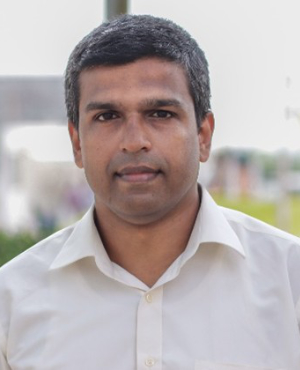
Prof Shivani Mishra is Fellow member of Royal Society of Chemistry and currently working as Associate Editor, RSC Advances, journal published by Royal Society of Chemistry, UK. She is also the founder and Director of Academy of Nanotechnology and Waste Water Innovations, South Africa. Besides, she is also working as Adjunct Professor at Vaal University of Technology as well as Hebei University of Science and Technology, China.  Her entrepreneurship venture engaging with academicians and researchers in order to promote translational research. As an International Advisory Board member, she is am serving at Technical University Vienna, Austria. Prior to this, she was appointed as Full Professor at University of South Africa and served at University of Johannesburg as an Associate Professor She holds experience of Postdoctoral fellow at various academic institutions in South Africa. Her research expertise is material development using nanotechnology, waste water treatment and waste valorization and has accumulated research funding for her projects and has supervised many Doctoral and Master’s student. Over and above 120 research articles, 45 book chapters and five edited books goes to her research credentials and output. She has been Fellow of royal Society of Chemistry and has received many recognitions for her performances including Distinguished Woman in Science by Department of Science and Technology, South Africa and Woman in Research leadership by University of South Africa.
Dr Rangabhashiyam Selvasembian

Dr Rangabhashiyam Selvasembian

SRM University-AP, India
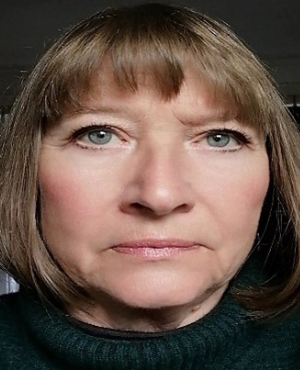
Dr. Rangabhashiyam Selvasembian, currently working as Head and Associate Professor in the Department of Environmental Science and Engineering, School of Engineering and Sciences, SRM University-AP, India. Previously worked in the Department of Biotechnology, School of Chemical & Biotechnology, SASTRA Deemed University, India. He received his Doctor of Philosophy degree from National Institute of Technology Calicut, India.  He was awarded a Post-Doctoral Fellowship by Max Planck Institute for Dynamics of Complex Technical Systems, 2015, Germany. He was further awarded the National-Post Doctoral Fellowship from SERB-DST, 2016-2018, India. Dr Rangabhashiyam Selvasembian was awarded as Young Scientist by DST, India for the BRICS Conclave held in Durban, 2018, South Africa and was the recipient of Hiyoshi Young Leaf Award from Hiyoshi Ecological Services, Hiyoshi Corporation, 2018, Japan. His major research interests are waste valorization and wastewater treatment. He is Editorial Board Member in Separation & Purification Reviews (T&F); Inorganic Chemistry Communications (Elsevier); Current Pollution Reports (Springer); Scientific Reports (Nature); Biomass Conversion and Biorefinery (Springer); Environmental Management (Springer). He is also serving as Associate Editor in South African Journal of Chemical Engineering (Elsevier); Frontiers in Environmental Chemistry; International Journal of Environmental Science & Technology (Springer); IET Nanobiotechnology (Wiley) and as an Academic Editor for Adsorption Science and Technology. He has published more than 130 peer reviewed articles and contributed several book chapters. He is editing books from prestigious publishers such as Elsevier, Wiley, CRC, and Springer. Dr Rangabhashiyam Selvasembian was listed in Top 2% (2021, 2022 and 2023) most cited research scientists in the world as per data published by Stanford University USA.
Professor Leslie Petrik

Professor Leslie Petrik

University of the Western Cape, South Africa
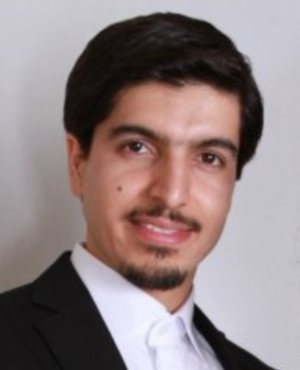
Prof Leslie Petrik obtained her PhD in Chemistry in 2008 at the University of the Western Cape and has independently developed and led the Environmental and Nano Sciences research group, in the Department of Chemistry, being grant holder and principal investigator of industrial and agency research projects with many successfully completed local and international research contracts.  Prof Petrik is regarded as a leading and well-established expert in chemistry, with a focus on material science and environmental chemistry & water treatment. Her scientific output includes 5 granted patents; 11 book chapters; 236 journal publications; 333 conference presentations; and numerous technical reports to industry and research agencies, with a Google Scholar h-index (56), i10-index (182), 10238 citations. Prof Petrik was recipient of the Water Legends Award of the Water Research Commission of South Africa in 2021, and won the National Science and Technology Forum NSTF-South32 award in 2018 for an outstanding contribution to science, engineering, technology (SET) and innovation.
Dr Saeid Hosseini

Dr Saeid Hosseini

Caldic, Benelux

Dr Saeid Hosseini is a techno-commercial expert in the domains of environmental and water technologies and knowledge-based solutions. He has vast experience in academia, research and industrial sectors, by which he combines science, technology and business together in order to address the challenges in the industrial operations. He has served more than a decade as university professor and three years as extraordinary professor at iNanoWS (UNISA).  After taking several distinct roles over the years, Dr Hosseini is currently Industry Manager at Caldic, one of the leading companies in the environmental solutions, and is responsible for handling several projects relevant to water and wastewater treatment and promoting sustainability in collaboration with the clients across the EU.
Professor Malik Maaza

Professor Malik Maaza

UNESCO UNISA-ITLABS-NRF Africa Chair, South Africa
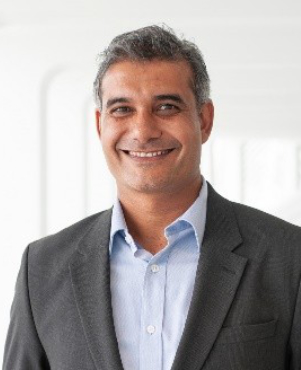
Professor M. Maaza is a native of North Africa, holds a PhD from the University of Paris-VI, is the current incumbent, in South Africa, of the UNESCO UNISA-ITLABS-NRF Africa Chair in Nanosciences & Nanotechnologies.  He is a joint staff of the University of South Africa and the National Research Foundation of South Africa. His Hindex is about 107 and i10 =563 with a total citation above 37000. He is a fellow of various Academies, including the African Academy of Science, the European Academy of Arts & Sciences as well as the National Academy of Science of India, the Islamic Academy of Sciences & the Royal Society of Chemistry-London as well as the New York Academy of Sciences. Prof. M. Maaza has been bestowed several awards & accolade among which; the African Union Nkwame Nkrumah award for Excellence in Science & Technology & the Galileo-Galilei award by the International Commission for Optics (ICO)as well as the J. Vasconcelos award for education by the World Cultural Council-Hong Kong in addition to the recent International Khawarizmi award as well as the International Union for Pure & Applied Physics (IUPAP)award. Prof. M. Maaza has been the architect behind several continental & National ongoing platforms including the UNESCO-UNISA-iTLABS/NRF Africa Chair in Nanosciences & Nanotechnologies (U2ACN2) African Laser Centre (ALC), the African Materials Research Society (AMRS), the African Light Source (AfLS), the Nanosciences African Network (NANOAFNET), the National Laser Centre (NLC) among others including the recently implemented African Centre of Competencies in Enhanced Nanosciences & Nanotechnologies for SDGs (ACCENTS).
Professor Ajeet Kaushik

Professor Ajeet Kaushik

Florida Polytechnic University, USA
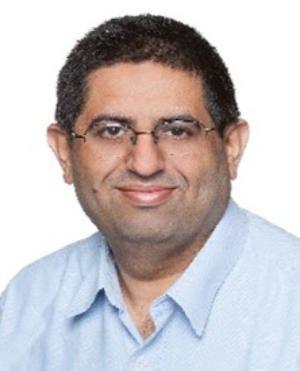
Ajeet Kaushik, Fellow-ICS, is an Associate Professor of Chemistry at the Department of Environmental Engineering, Florida Polytechnic University, USA. He is exploring nano-enabled technologies for health and environmental monitoring, involving efficient sensing and nanomedicine.  He is an accomplished scholar (supported by over 300 publications, editorial roles, 12 edited books, 3 patents, and international collaborations) and the recipient of several international awards in support of his credentials. His research interests include green chemistry, electrochemistry, chemical sensors, biosensors, nanomedicine, targeted drug delivery, point-of-care sensing, and personalized health wellness. To achieve goals, Dr. Kaushik is focused on cutting-edge research and seeking collaborations. 
Professor Amit Rawal

Professor Amit Rawal

Indian Institute of Technology, Delhi, India
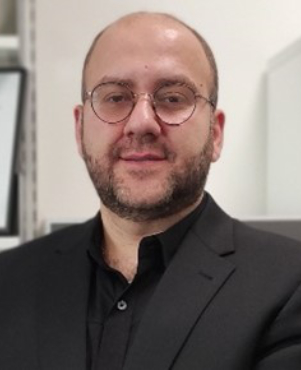
Professor Amit Rawal obtained his PhD from the University of Bolton, UK, and a Master of Philosophy from The University of Manchester, UK. He is a recipient of the Alexander von Humboldt Research Fellowship for experienced researchers to conduct research in the field of nonwovens in Germany. He has also been awarded the Fulbright-Nehru Academic and Professional Excellence Fellowship to initiate collaboration with the Massachusetts Institute of Technology, USA.   In addition, he has received numerous awards, including the Young Researcher Fellowship from the prestigious M.I.T, Cambridge, for exemplary research in Computational Mechanics, Fellowship of the Textile Institute, CSIR special research award, and an Outstanding Young Faculty Fellowship by the Indian Institute of Technology, Delhi (IITD). Currently, he is working as a Professor at the Department of Textile and Fibre Engineering, IIT Delhi. He has published over 100 papers in reputed journals and has delivered numerous keynote, invited, and plenary lectures at national and international conferences. He has developed various three-dimensional (3D) analytical models for predicting geometrical, mechanical, and wetting properties of a diverse range of textile and allied structures. His research interests are not only limited to the structure, mechanics, and wetting behavior of textile and allied materials but also focused on the structure-property relationship of buckypapers, battery separators, electrospun mats, superhydrophobic fibrous mats, geotextiles, composites, auxetic, piezoresistive, and piezoelectric materials. He is an editorial board member of Textile Research Journal, Journal of Industrial Textiles and Research Journal of Textile & Apparel. Recently, he was honored as the twenty-ninth recipient of the King Carl XVI Gustaf Professorship in Environmental Science for the year 2024/25.
Professor Mohsen Rahmani

Professor Mohsen Rahmani

Nottingham Trent University, UK
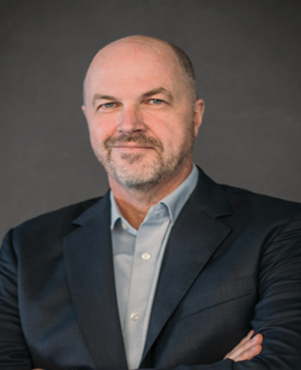
Mohsen Rahmani is a professor of optics and photonics and the leader of the advanced optics and Photonics laboratory at Nottingham Trent University (NTU), in the UK. He obtained his PhD from the National University of Singapore in 2013, followed by a postdoc fellowship at Imperial College London and the Australian Research Council Early Career Fellowship at the Australian National University.  In 2020, he joined NTU via the Royal Society Wolfson Fellowship. Shortly after moving to the UK, he was also awarded the UK Research and Innovation Future Leaders Fellowship. Recently, he has secured an ERC Consolidator Grant. His research activities span over light-matter interactions with nanometre-scale particles for applications in flat optics, near-infrared imaging, bio-sensing, and reconfigurable optics. He has received several prestigious awards and prizes, including the Australian Eureka Prize (Australian Oscar of Science), the Early Career Medal from the International Union of Pure and Applied Physics, and the Australian Optical Society Geoff Opat Award. Professor Rahmani has delivered 40+ invited talks, seminars and keynotes at international conferences and has published more than 80 peer-reviewed journal papers (H-index=43). He is the past chair of the IEEE Nanotechnology Chapter across the UK and Ireland section (2021-2023) and a distinguished lecturer for the IEEE Nanotechnology Council 2024-2025.
Professor Michael Claeys

Professor Michael Claeys

University of Cape Town, South Africa
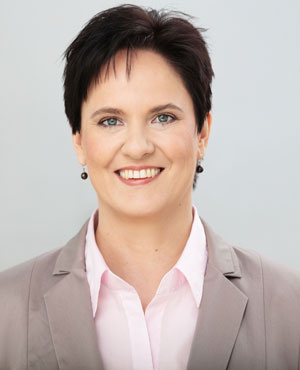
Professor Claeys obtained his PhD (with distinction) in Fischer-Tropsch catalysis at the University of Karlsruhe, Germany, in 1997 and then joined the Catalysis Institute at the University of Cape Town. Here he was instrumental in establishing a large research activity with focus on Fischer-Tropsch catalysis, a technology, which lies at the heart of South Africa’s synthetic fuels and chemicals industry and which is playing an increasingly important role in the production of green future fuels via Power-to-X processes.  Other research interests include the preparation and characterisation of nano materials and their use in catalytic applications, as well as the development of catalysts and novel instrumentation for characterisation of catalysts at working conditions. Professor Claeys has published extensively on these topics, he holds a number of patents and he has been awarded an A-rating (‘leading international researcher’) by the National Research Foundation of South Africa. A large portion of his research is conducted in conjunction with industrial partners, in particular a longstanding industrial collaboration with Sasol R&D. Professor Claeys directed the Director of the DSI-NRF Centre of Excellence in Catalysis, c*change, a large virtual and multidisciplinary Centre, where he also acted as the Manager of the Scientific Synthesis Gas Programme, which includes processes of catalytic valorization of CO2. He is currently involved in various large PTL projects including the BMBF-funded CARE-O-SENE consortium and the South African national Coal CO2-to-X flagship programme. Moreover, he is the co-founder and director of three spin-off companies and the founding Chairperson of the Syngas Convention, a triennial international meeting on synthesis gas technologies held in Cape Town.
Professor Andrea Haase

Professor Andrea Haase

German Federal Institute for Risk Assessment (BfR), Berlin, Germany

Andrea Haase studied biochemistry at the University of Tübingen, obtained a PhD from the University of Heidelberg, finished a postgraduate study in Toxicology at the University of Leipzig and completed her habilitation in pharmacology and toxicology at the Freie Universität Berlin. Since 2008 she is working at the German Federal Institute for Risk Assessment (BfR) in Berlin, where she is the Unit Head of the “Fibre and Nanotoxicology” Unit and the Deputy Department Head of the “Chemical and Product Safety” department.  Her research is strongly focused on New Approach Methodologies (NAMs) and their application for human health risk assessments as well as for Safe-and-Sustainable-Innovation Approaches (SSIA). She has written more than 100 scientific publications and is involved in several large research projects such as GRACIOUS, NanoInformaTIX, HARMLESS, POLYRISK, NAMs4NANO. Furthermore, she is a national scientific expert in the EFSA Nano Network (Network for Risk Assessment of Nanotechnologies in Food and Feed) since 2024.

Professor John T. W. Yeow

Professor John T. W. Yeow

University of Waterloo, Waterloo, ON, Canada
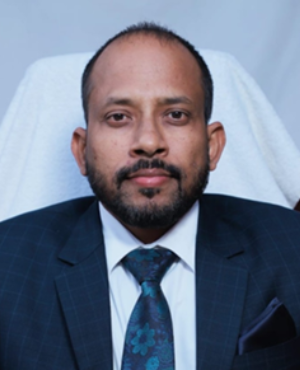
John T. W. Yeow received the B.A.Sc. degree in electrical and computer engineering, and M.A.Sc. and PhD. degrees in mechanical and industrial engineering from the University of Toronto, Toronto, ON, Canada. He is currently a Professor and a University Research Chair in the Department of Systems Design Engineering at the University of Waterloo, Waterloo, ON, Canada.   He is focused on the development of micro/nanodevices for a wide range of applications. He is a recipient of the Professional Engineers Ontario Young Engineer Medal, Professional Engineers Ontario Engineering Excellence Award, Natural Science & Engineering Research Canada Innovation Challenge Award, Douglas R. Colton’s Medal of Research Excellence, Micralyne Microsystems Design Award, Ontario Ministry of Research and Innovation’s Early Researcher Award, University of Toronto Alumni Association 7T6 Early Career Award, 2011 IEEE NANO Excellence Paper award, Waterloo Institute for Nanotechnology Research Leader Award, and IEEE Canada Outstanding Engineer Award. He was a Canada Research Chair in Micro/Nanodevices (2009 – 2019). He served as the Editor-in-Chief of the IEEE Nanotechnology Magazine from 2014 – 2019. He is currently a Senior Editor of Microsystems & Nanoengineering, IEEE Transactions on NanoBioscience, and IEEE Transactions on Nanotechnology. He is an IEEE Fellow, and Fellow of the Canadian Academy of Engineering, the Engineering Institute of Canada, Engineers Canada, and a Member of College of New Scholars, Artists and Scientists of the Royal Society of Canada. He was a IEEE Nanotechnology Technical Council (NTC) Distinguished Lecturer, and a recipient of the 2021 IEEE NTC Distinguished Service Award. He was the IEEE NTC Vice-President of Educational Activities (2020-2022), and is the IEEE NTC Vice-President Elect of Conferences (2024 – 2026).
Dr Manoj K. Patel

Dr Manoj K. Patel

CSIR Central Scientific Instruments Organisation, India

Dr. Manoj K. Patel received his B.Tech degree from NIT Jamshedpur and completed his PhD from the Academy of Scientific and Innovative Research (AcSIR). He is a Senior Principal Scientist at CSIR-CSIO, Chandigarh, and an Honorary Professor at AcSIR. His research interests include food safety and nutrition, 3D food printing, green energy, electrostatic liquid atomization, airborne charged particulate technology, surface decontamination, precision agriculture, UAVs and aerial electrostatic spraying, and social innovations.   Dr. Patel has completed numerous projects funded by CSIR, USISTEF, SERB, TDB, NIF, DST, the Govt. of India, research foundations, and industries. He is a project leader of various national and international projects funded by the CSIR HRDG, DST, Govt. of India. He has transferred eight (08) technology know-how to various industries for commercial production. Dr. Patel has received several awards; the most prominent are: Young Achiever Alumnus Award 2024, BRICS Young Scientist Award 2022, CSIR Young Scientist Award 2020, IEI Young Engineers Award 2019, NRDC National Societal Innovation Award 2017, and Gandhian Young Technological Innovation (GYTI) Award 2016. He is a recipient of the CSIR Raman Research Fellowship from CSIR (2024-2025), the Post Graduate Research Program for Engineers (PGRPE) Fellowship from CSIR (2010-2012), and the TATA Cummins Meritorious Scholarship from TATA CUMMINS (2009-2010).
Dr. Patel is a Fellow of the Indian Social Science Academy (ISSA) and the Institution of Electronics and Telecommunication Engineers (IETE). He has served as a member of the advisory board of the World Space Council and the Biostandups. Currently, he is serving as a secretary of the Electrostatics Society of America (ESA), USA, a member of the International Advisory Board (IAB), Polytechnic of Leiria, Portugal, and an external member of the Board of Studies (BoS) of the National Institute of Technology (NIT), Jamshedpur.
©  Smart Materials Conference 2025